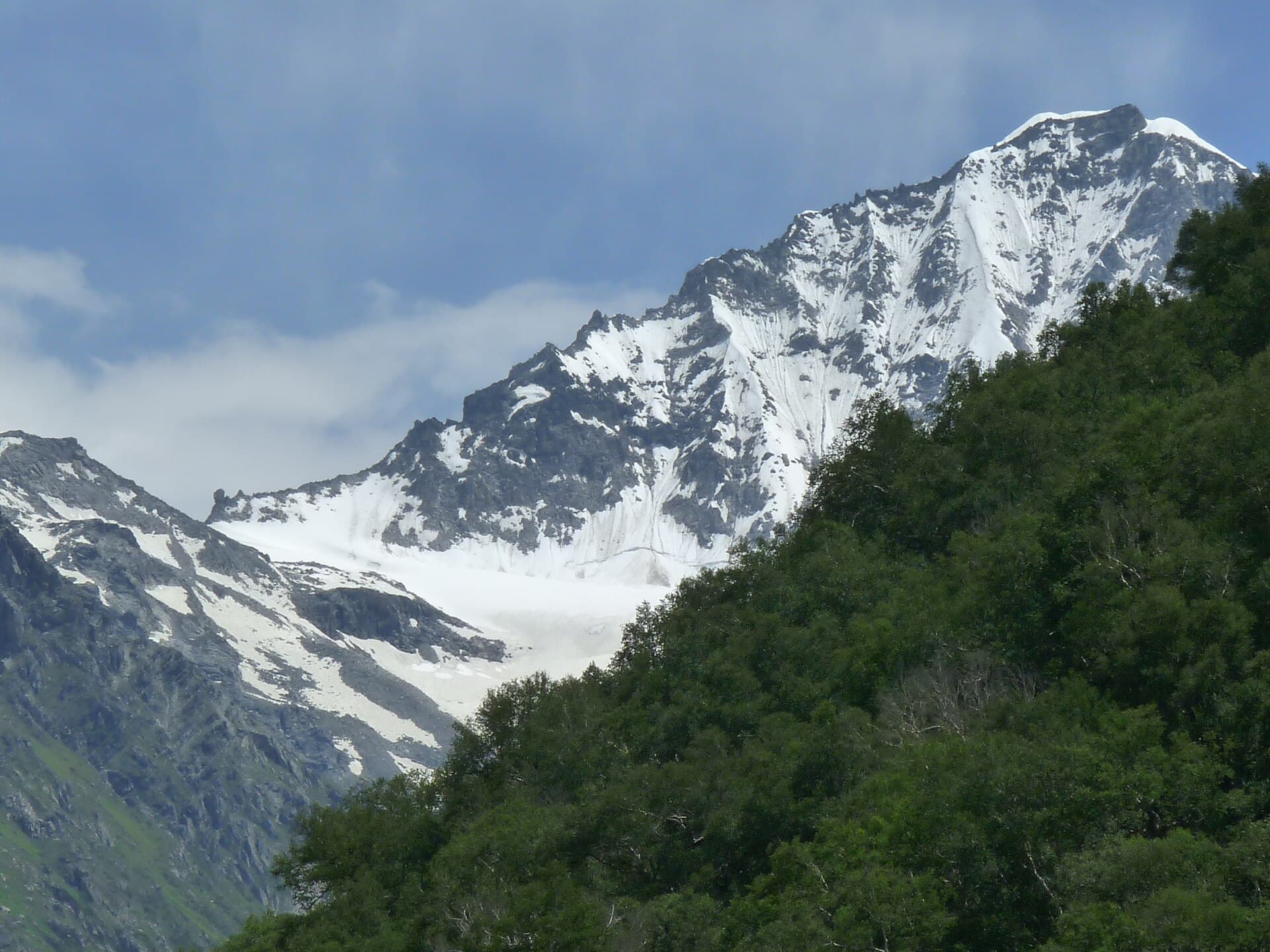
Valley of Flowers
A UNESCO valley that opens for four months a year, and only if you get the paperwork right.
Photo: Kp.vasant / Wikimedia Commons (CC BY-SA 4.0)
Moderate
Difficulty
38 km
Distance
4D / 3N
Duration
3,658 m / 12,001 ft
Peak Altitude
Monsoon, Post-Monsoon
Best Season
Why This Trek
Valley of Flowers
Most people hear 'Valley of Flowers' and picture a place you can just show up to. It isn't - it's a notified national park with a Forest Department permit, a hard visitor process, and a season that runs roughly four months a year. That gate is exactly what keeps the meadow the way it is. We'd rather explain that clearly upfront than sell it as an easy add-on.
Before You Book
- Forest access may require a valid permit.
- Authorised guide support may be mandatory.
- Departure depends on current route availability.
- Weather and wildlife conditions may affect access.
- Route and timings can change for safety reasons.
- Camping is only offered where currently permitted.
- Government ID may be required for permit registration.
- Final confirmation is issued only after operational verification.
The Trail
The approach climbs steadily from Govindghat to Ghangaria along the Pushpawati valley - a well-built but relentless ascent gaining close to 1,200m over 13km. From Ghangaria, the valley itself is a separate day visit within the park's permitted hours, following a gentler trail deeper into the meadow past glacial streams and scattered bloom clusters. No stay is permitted inside the national park boundary itself; every night on this trek is spent in Ghangaria, outside the park gate. Access, fees and season dates are set by the Uttarakhand Forest Department and are subject to change.
- Hundreds of Himalayan flower species, many found nowhere else on earth
- A UNESCO World Heritage core zone within the Nanda Devi Biosphere Reserve
- A narrow monsoon-season bloom window that most travellers never plan around
- Ghangaria, a mountain hamlet that doubles as base for the valley and the Hemkund Sahib pilgrimage
Itinerary
- 1
Govindghat to Ghangaria
A long, steady climb along the Pushpawati river valley from the roadhead at Govindghat to the mountain settlement of Ghangaria, base for both the valley and Hemkund Sahib.
13 km · +1200 m
- 2
Ghangaria to Valley of Flowers and back
Enter the national park at its permitted opening hour and walk deeper into the meadow, among endemic alpine flowers and glacial streams, before returning to Ghangaria by evening as required by park rules.
9 km · +600 m
- 3
Second day in the valley, or Hemkund Sahib side trip
A second entry permit lets us go further into the park's less-visited sections, or the day can be used for the steep side trip up to Hemkund Sahib, weather and group preference permitting.
8 km · +400 m
- 4
Ghangaria to Govindghat
Descend the same valley trail back to the roadhead at Govindghat, closing the loop.
13 km
Who Is This Trek For?
Fitness level required: moderate. Group size runs 6–12 people. Age range: 12–60 years.
Participants above 50 years must share a valid medical fitness certificate with our team before the trek.
Inclusions & Exclusions
- Forest Department permit coordination for park entry
- Trek leader and on-trail first-aid support
- All meals and guesthouse accommodation at Ghangaria
- Travel to and from Govindghat
- Personal trekking and rain gear
- Hemkund Sahib entry, if taken as an alternate Day 3
- Medical certificate fee, where applicable
What to Carry
- Waterproof trekking shoes and a full rain layer (this is a monsoon-window trek)
- Valid original photo ID for the Forest Department permit
- Warm layers for Ghangaria evenings, even in July-August
- A daypack for the in-park walking days, separate from main luggage
Safety
- Trek leader carries a first-aid kit and satellite communication where network is unavailable
- The steep Govindghat-Ghangaria ascent is the main exertion point of this trek - paced deliberately, not rushed
- Monsoon-season landslide and weather risk on the approach road is monitored day-of and can change the schedule
- All valley entries follow park opening/closing hours - no exceptions, no after-hours entry
Permits
Valley of Flowers National Park is a UNESCO World Heritage Site and a notified national park under the Wildlife Protection Act, administered by the Uttarakhand Forest Department. A dated entry permit is mandatory for every visitor - currently around ₹200 per day for Indian nationals and ₹800 for foreign nationals, issued at the Forest Department check post near Ghangaria against valid photo ID. The park opens only for a narrow window, roughly 1 June to 31 October each year, and is fully closed outside that period. No camping or overnight stay is permitted inside the park boundary - all nights are spent in Ghangaria. Entry can be capped on high-demand days in peak bloom season (late July - mid August). We will not open bookings until we've run this route ourselves and reverified the current fee, season dates and process directly with the Forest Department.
Cancellation Policy
A ₹1,000 Booking Advance secures your booking request. Final confirmation is issued only after operational and permit verification. The advance is non-refundable and non-transferable, as it blocks your spot in the group.
If we cancel a trek due to weather, safety, or forest department restrictions, you get a full refund or a free reschedule.
Notes
Permit fees, daily visitor caps and exact season open/close dates change year to year and must be reconfirmed with the Forest Department before any booking is offered.
Sustainability
The Forest Department's own permit cap exists because this meadow cannot absorb unlimited foot traffic - we'll work within that cap, not around it, once we run this trek.